
Best STEM Toys for Boys: 7 Picks by Age and Interest

Disclosure: This guide contains affiliate links. If you buy through them, we may earn a commission at no extra cost to you.
The best STEM toy for a boy is one that matches his interests and stage of development. Our seven picks cover building, electronics, physics, chemistry, nature and coding. MAGNA-TILES is our starting point for open-ended play; older children may prefer a more focused kit. These are toys for any child with the same interests, with age guidance shown individually.
These recommendations combine the original guide’s useful buying judgments with manufacturer specifications and product checks. This update does not add new hands-on testing claims. Age labels, required extras and exact model numbers matter more than a generic STEM label.
Compare the 7 picks
| Kit | Best fit | Age guidance | Before buying |
|---|---|---|---|
| MAGNA-TILES Classic 100-Piece Set | Open-ended building | 3+ | No batteries or screen |
| Snap Circuits Jr. | First electronics projects | 8+ | Two AA alkaline batteries, not included |
| GraviTrax BASE Starter Set | Track design and physics | 8+ | Clear table or floor space |
| Thames & Kosmos Chem C1000 V2.1 | Structured chemistry | 10+; adult supervision | 9V battery, experiment supplies and adult eye protection |
| Carson MicroFlip | Adult-assisted nature observation | Maker minimum age unverified | One AA alkaline battery; phone optional |
| Makeblock mBot Ultimate | Mechanical building and coding | 12+ | Computer; six AA or compatible rechargeable battery; check bundle |
| Grow N’ Glow Terrarium | Plant care and patient observation | 6+ | Water, suitable light; check availability — maker sold out at check |
1. MAGNA-TILES Classic 100-Piece Set — open-ended building

For a child whose favorite part of building is inventing the next thing, this remains our first choice. The Classic 100 combines squares and three kinds of triangles, giving children a way to turn flat shapes into rooms, towers and imaginative structures. There is no prescribed finished model to protect once it is built. That makes it particularly useful for siblings who want to build together, pull things apart and begin again.
The appeal is how little setup stands between an idea and a first attempt. Suggest a simple challenge—make a roof, enclose a toy animal, or build two different bridges—then let the child discover what stays upright. Those are suggested activities, not results from a new hands-on test. The trade-off is that this box does not provide a structured science course or moving machinery. Choose Snap Circuits for that kind of cause-and-effect activity. MAGNA-TILES rates this set for ages 3+; keep the manufacturer’s age guidance and inspect pieces before play.
Product details: manufacturer information.
2. Snap Circuits Jr. — first electronics projects

Our original enthusiasm for Snap Circuits still makes sense: a child can assemble a working circuit without first learning to solder. The SC100 uses snap-together modules and a base grid, with more than 100 projects across its printed and online instructions. Lights, sounds and a motor give a beginner something concrete to investigate. Follow the diagram, see what happens, and use the explanation to connect the result to the circuit.
This is the smaller Jr. set, not the SC300 Classic or SC130 Jr. Select. That distinction matters when comparing prices, project counts and replacement parts. We would start here for a child curious about electronics who is not yet asking for a large kit. Add two AA alkaline batteries to the gift. Elenco calls for adult judgment and supervision, warns against connecting circuits to household outlets or extra power sources, and says never to leave a circuit unattended with batteries installed. Follow its motor/fan precautions as well; the fan is not something to aim at people.
Product details: manufacturer information, instructions and supporting details.
3. GraviTrax BASE Starter Set — track design and physics
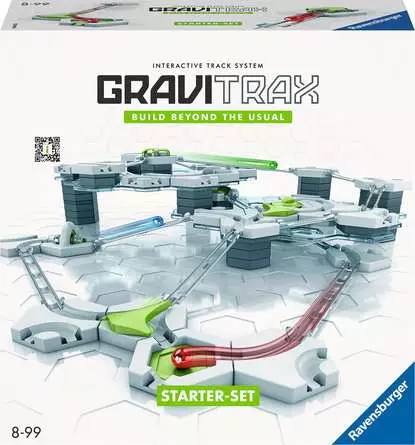
GraviTrax suits the child who wants to make something happen, then work out why it stopped happening. Building a ball track gives every adjustment a visible consequence: a route succeeds, a ball stalls, or a junction needs another try. The BASE Starter Set is our pick for that iterative style of play. It gives children a complete starting point before they consider extra track elements.
For a useful first challenge, ask the child to predict whether the ball will reach the end before releasing it. Then change one part of the route and compare. That turns a race to finish into a small design investigation without adding a worksheet. The main practical cost is space: a layout needs somewhere it can survive between attempts. Keep the small balls and components away from younger children. Ravensburger rates article 22410 for ages 8+. Check the article number when shopping; an older GraviTrax starter box is not automatically this exact set, and expansion packs are not a substitute for a starter set.
See the exact kit and availability
Product details: manufacturer information.
4. Thames & Kosmos Chem C1000 V2.1 — structured chemistry

Choose Chem C1000 for a child who wants explanations as well as a colorful reaction—and for a family willing to make experiment time a shared activity. The V2.1 kit offers 125 experiments and an 80-page manual, covering subjects such as indicators, separating mixtures, fluids and metals. We prefer that clear progression to buying a box solely because it advertises a huge experiment count.
This is a more demanding commitment than a casual craft kit. The manufacturer rates it 10+ and requires adult supervision; its chemicals can be harmful if misused. Read the manual before opening the containers, use the required eye protection, and keep younger children and animals away. Eye protection for the supervising adult is not included. The product also requires a 9V battery, and some experiments need additional materials listed in the manual. Buy it for planned, supervised sessions with time to prepare and clean up. For independent play between short activities, the magnetic tiles or track set are a better match.
See the exact kit and availability
Product details: manufacturer information, instructions and supporting details.
5. Carson MicroFlip — adult-assisted nature observation

For a child who keeps bringing home interesting leaves, a microscope can be a more personal gift than another robot. The MicroFlip MP-250 offers 100–250× magnification in a portable format, with a smartphone clip for sharing what is seen. A phone is optional for looking through the microscope; it becomes useful when the family wants to capture an image and compare observations later.
We would make this an adult-assisted gift because Carson’s minimum age was not established in the maker material checked for this guide. That is our buying caution, not a manufacturer age rating. Plan to help with positioning, focus and choosing suitable samples rather than expecting every object to produce a striking image immediately. Start with a flat, still subject and ask what changes as the magnification changes. The device needs one AA alkaline battery. Read the maker’s light precautions, including not looking directly into its LED/UV illumination. This is an observation tool, not a complete biology course or a substitute for safe sample handling.
Product details: manufacturer information, instructions and supporting details.
6. Makeblock mBot Ultimate — mechanical building and coding
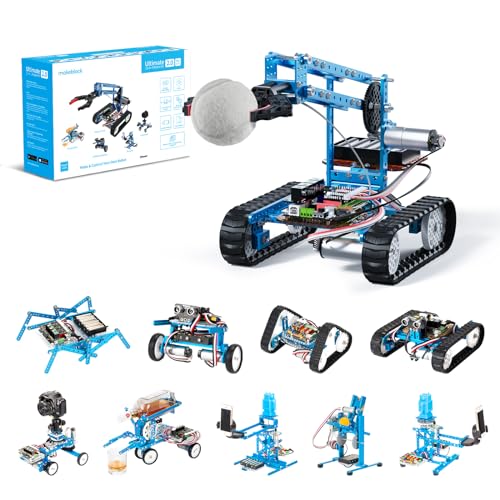
If the child specifically wants a robot, mBot Ultimate offers a substantial building project rather than a ready-made character that only performs preset tricks. Makeblock describes ten robot configurations and supports block programming alongside Arduino IDE. It is the option here for an older child who enjoys following a build, troubleshooting it, and then returning to change how it behaves.
The important purchase is the whole setup, not just the box. Check computer compatibility and the selected bundle before gifting it. The robot uses six AA batteries or a compatible rechargeable lithium battery pack; included power supplies vary by bundle. Python is not a simple standalone feature of the base kit: Makeblock’s support guidance requires a Raspberry Pi and additional setup for that route. Do not assume the Pi is supplied. We would choose this for a motivated builder aged 12+ with someone available to help through the first mechanical or software snag. If the child wants a quick screen-free activity, choose another interest from this list. This is a separately identified alternative to the older MINDSTORMS and Meccano robots previously featured here.
Product details: manufacturer information, instructions and supporting details.
7. Grow N’ Glow Terrarium — plant care and patient observation

This remains an appealing choice for a child more interested in living things than coding. The #1137000 terrarium combines a plastic jar, growing medium, chia and wheatgrass seeds, decorative materials and a mister. Making the miniature garden is only the beginning: the more interesting part is checking what changes over the following days. The manufacturer describes enough material for two plant life cycles.
Our favorite part of the original recommendation was the ongoing care, and that remains the reason to consider it. Take a photo or sketch at the same time each day, notice the first shoots, and talk about the need for water and light. Follow the supplied growing directions rather than assuming more water means faster growth. The maker rates it for ages 6+. There is an availability catch: Faber-Castell’s US product page showed this exact kit sold out on September 30, 2026. Treat it as a choice to revisit or buy only after confirming an exact retailer offer. A pot, suitable seeds and growing medium can also provide a simpler plant-observation activity.
See the exact kit and availability
Product details: manufacturer information.
How to choose a STEM toy for a boy
Begin with what he already likes doing. A child who builds elaborate imaginary worlds may enjoy tiles; someone who asks why a light comes on may prefer circuits; a patient observer may want plants or a microscope. The same choices work for girls and other children with those interests. Gender does not determine which subject will hold a child’s attention.
Keep the manufacturer’s age guidance separate from difficulty. A child can be an experienced builder and still need the supervision specified for a chemistry kit. Also count the practical extras: batteries, a suitable computer, work space, cleanup and an adult’s time can change whether a gift gets used.
Choose screen time deliberately. Building a robot can combine physical construction with coding, while tiles, circuits, growing projects and ball tracks offer activities without a phone or computer. For more focused options, see our coding-toy guide.
What changed from the older recommendations?
The earlier guide included LEGO MINDSTORMS Robot Inventor, CoDrone Pro, Meccano Micronoids and MeccaNoid XL 2.0. We are not presenting those older exact models as straightforward current purchases because their present offers and support were not established for this update. The mBot Ultimate recommendation is a different product, not a relabeling of an old robot.
Chem C1000 also replaces the older Learn & Climb recommendation with a separately identified chemistry kit and its own higher age and supervision requirements. MAGNA-TILES, Snap Circuits Jr. and the terrarium interest remain, with current model details and the terrarium’s availability limitation made explicit.
Do STEM toys guarantee learning?
No toy guarantees a particular educational outcome. The useful part is the activity it invites: predicting, building, observing, explaining and trying again. Ask a child what they think will happen and give them room to investigate within the instructions. A toy that fits their curiosity is more likely to become part of play than one chosen only for an impressive list of features.
Last update on 2026-10-20 / Affiliate links / Images from Amazon Product Advertising API