

Best Architecture Modeling Kits: 6 Picks for Kids and Adults

The best architecture modeling kit depends on whether you want to design your own building, assemble a landmark or give a child a place to start. Our six picks cover those different jobs. Arckit A200 leads for original architectural design; LEGO London is our compact landmark choice. The detailed Notre-Dame model is included with an explicit stock caveat.
These recommendations combine the original guide’s useful buying judgments with manufacturer specifications and product checks. This update does not add new hands-on testing claims. Age labels, required extras and exact model numbers matter more than a generic STEM label.
Compare the 6 picks
| Kit | Best fit | Age guidance | Before buying |
|---|---|---|---|
| Arckit 200 sqm Architectural Model Building Kit | Design your own buildings | 14+ | Printer and suitable paper optional for finishes |
| LEGO Architecture London | Compact landmark display | 12+ | Shelf space; no device needed |
| KEVA Structures 200 Plank Set | Balance and open-ended structures | 5+ | Flat building surface; no glue |
| Arckit Greenscape Village | Neighborhood planning and storytelling | 5+ | No printer needed for included scenery |
| LEGO City Fire Station with Fire Truck | A building that becomes a playset | 6+ | No screen required; app optional |
| LEGO Architecture Notre-Dame de Paris | Detailed architectural history model | 18+ | Large display space; availability varies — maker temporarily out of stock at check |
1. Arckit 200 sqm Architectural Model Building Kit — design your own buildings
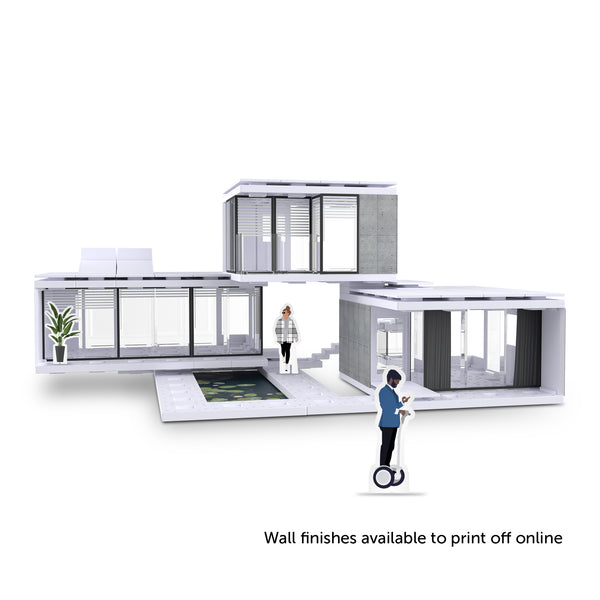
For someone who wants to design a building rather than reproduce a landmark, Arckit A200 is our first choice here. Its reusable components encourage changes to a floor plan, room arrangement or exterior without starting from raw card and glue. The current 200-piece kit includes cardboard people, trees and furniture, plus a booklet with an initial design. Arckit also supplies alternative designs online.
The key buying detail is that the attractive wall finishes shown on the packaging are not included. They are downloadable from the Arckitexture library, so reproducing those finishes means having access to a printer and suitable printable paper. The model can still be built without them. Arckit specifies a 1:50 metric scale and an age recommendation of 14+. We would choose it for a teen or adult who enjoys revising a design, not someone who mainly wants one instantly recognizable ornament. The modern modular appearance is also a matter of taste: if the recipient loves historic façades, start with a landmark kit instead.
See the exact kit and availability
Product details: manufacturer information.
2. LEGO Architecture London — compact landmark display
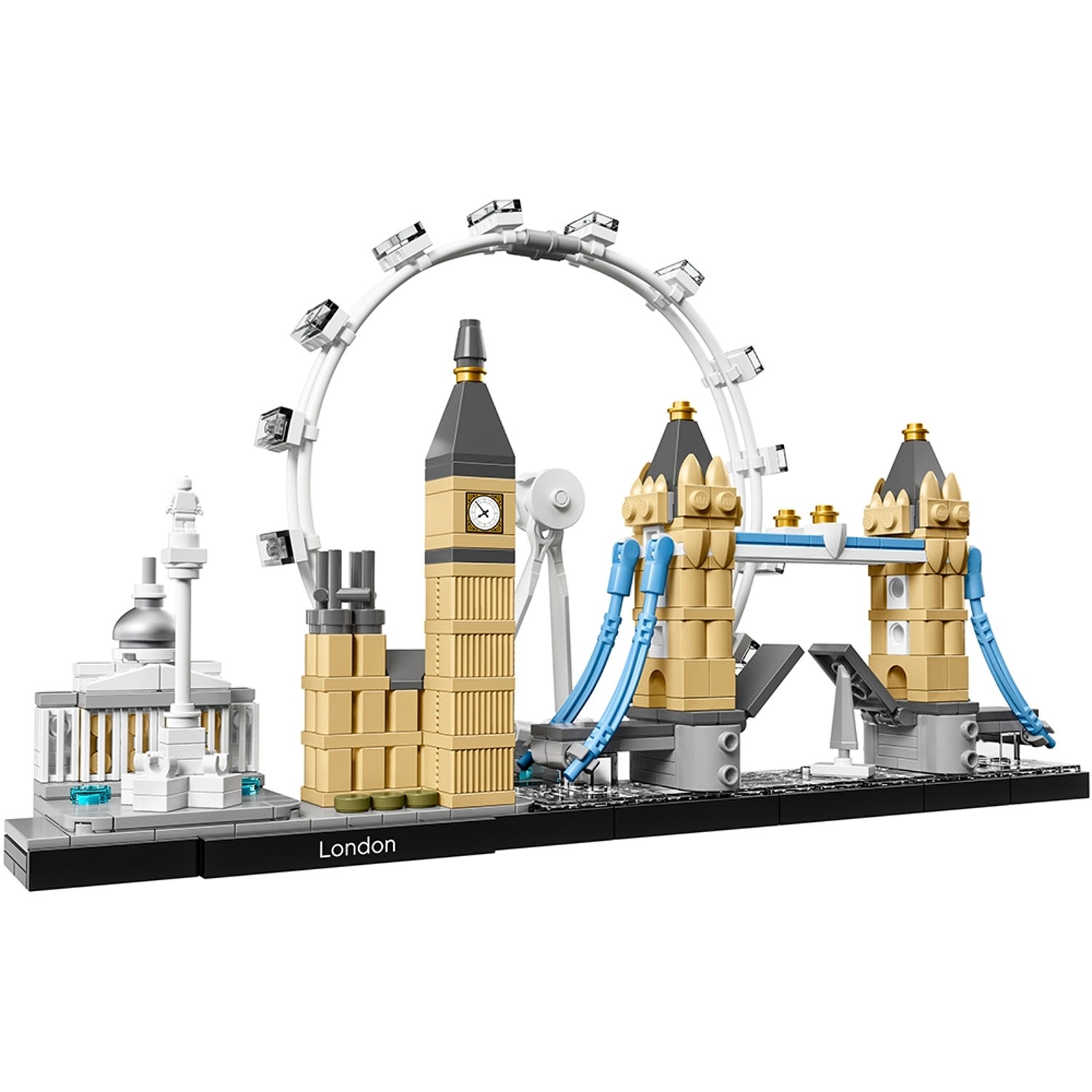
London remains our accessible landmark pick from the original guide. Set 21034 contains 468 pieces and brings several familiar buildings and structures together in one skyline, including the London Eye and Tower Bridge. For a teenager who likes travel, cities or recognizable models, that is a clear destination to build toward without the scale of a multi-thousand-piece adult set.
We particularly like this format when the finished display matters as much as the process. A skyline gives the builder different silhouettes to compare, but it is an interpretation of a city rather than a single consistently scaled architectural survey. It is also a guided model: someone hoping to lay out a home or explore floor plans will get more freedom from Arckit. LEGO rates it 12+, and the pieces can be reused in other brick builds after the skyline has had its turn on the shelf. Check for set number 21034 when comparing offers; the name “London” alone is too broad to identify the box.
See the exact kit and availability
Product details: manufacturer information.
3. KEVA Structures 200 Plank Set — balance and open-ended structures
KEVA is the simplest way into architecture on this list: the builder stacks wooden planks and relies on balance. The 200-plank Structures set comes with an idea booklet, but no connectors or glue are needed. That leaves plenty of room for bridges, towers, repeating patterns and the sort of experiment that ends in a collapse and a better second attempt.
We would choose it for a younger child who wants to invent, or for siblings who need a common building material. Ask them to make a span wider or a tower steadier using the same number of planks. Those constraints introduce useful design questions without prescribing one correct building. It is less suitable if the recipient wants doors, windows, miniature furniture or a model that can be carried around intact. Build on a stable surface and leave room around tall structures. MindWare recommends ages 5+. Buy the Structures set specifically: the brand also sells other KEVA configurations, and their accessories and instructions are not necessarily the same.
See the exact kit and availability
Product details: manufacturer information.
4. Arckit Greenscape Village — neighborhood planning and storytelling
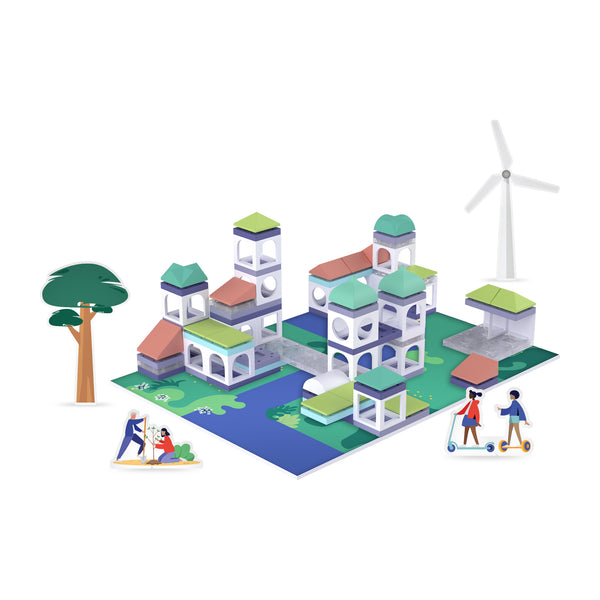
Greenscape Village preserves the city-planning idea we liked in the older Arckit recommendations while giving the reader a clearly identified current kit. The maker lists 124 construction pieces, 23 cardboard scenery pieces and a scenic building plate. That combination invites a child to think beyond a single house: where do people gather, how do paths join, and what belongs beside an open space?
The important distinction is scale. Arckit describes this set’s scale as something the child can interpret; it is not presented as a precise 1:50 planning model. We would use it for imaginative neighborhood design and conversations about how places work, rather than measuring a proposed building. The environmental theme can prompt discussion, but the model’s scenery is not evidence that a real settlement would be self-sufficient. The age recommendation is 5+, and instructions provide a starting design with alternatives online. Choose A200 instead for an older aspiring architect who wants a more restrained, measured house-design exercise. Both suit rebuilding more than a permanent finished display.
See the exact kit and availability
Product details: manufacturer information.
5. LEGO City Fire Station with Fire Truck — a building that becomes a playset

For a child who wants to use the finished building in stories, LEGO City is a more natural starting point than an adult display model. Fire Station with Fire Truck 60414 includes a station with working spaces, sleeping quarters and two garages, alongside the emergency vehicle and characters. The building’s rooms give a young builder a concrete reason to think about what happens inside different parts of a structure.
This is a playset first, so we would not buy it expecting the level of architectural detail in a dedicated landmark model. Its advantage is the life after construction: children can move the figures through the rooms, send the truck out and rebuild parts of their town. LEGO specifies ages 6+ and 843 pieces, so allow several sessions and offer help with sorting if needed. Printed instructions are included; the Builder app is an optional aid. This is the newer, separately numbered 60414, not the Fire Station 60215 from the original guide. Keep its small pieces away from children under three.
See the exact kit and availability
Product details: manufacturer information.
6. LEGO Architecture Notre-Dame de Paris — detailed architectural history model
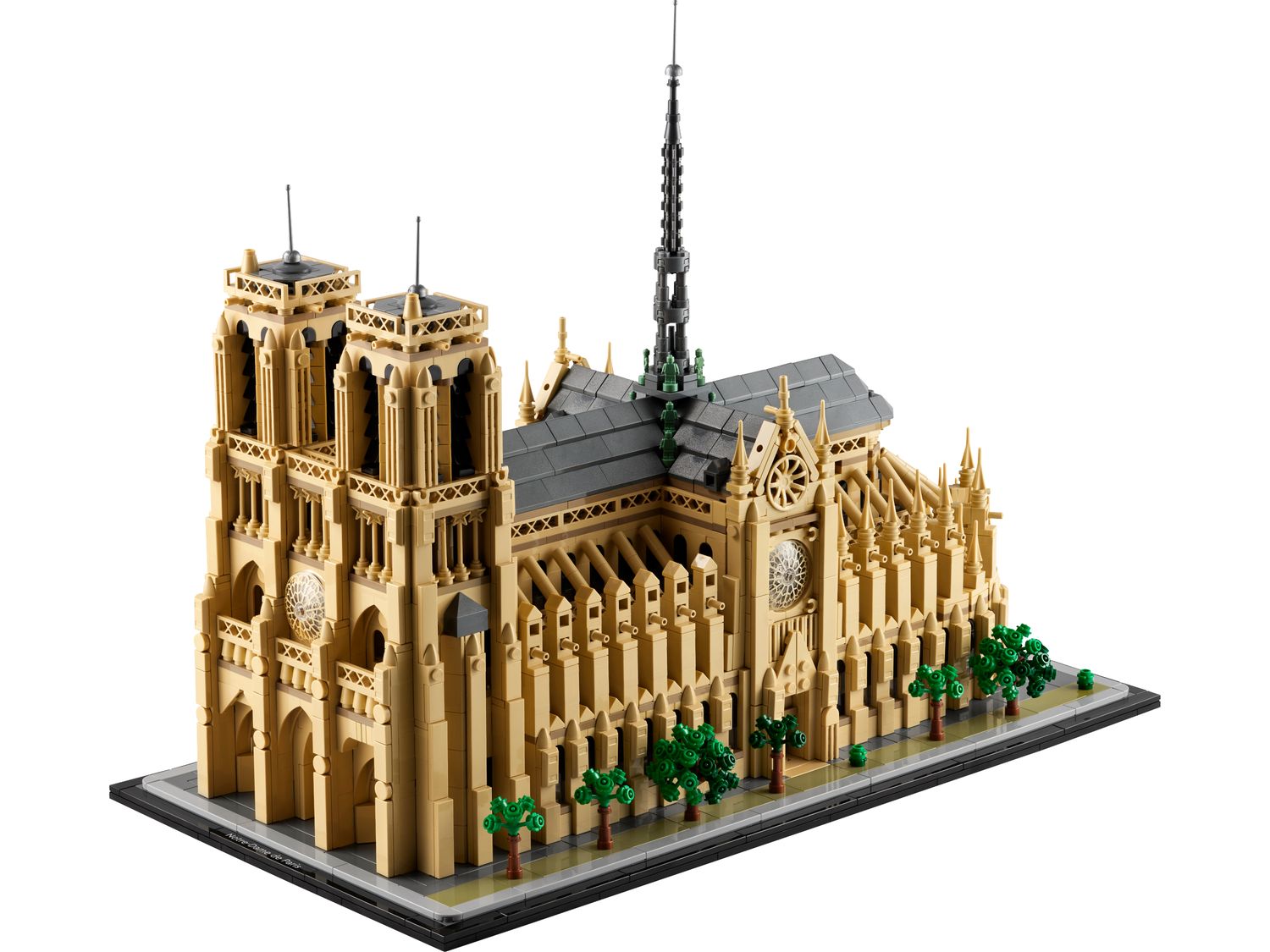
Notre-Dame is the choice for an adult who wants a detailed landmark and a longer building project. The 4,383-piece model follows stages of the cathedral’s construction and restoration, representing its appearance before the 2019 fire. Features such as the removable roof make it possible to inspect the interior columns and arches instead of treating the building as a sealed exterior shell.
We would choose it for a recipient interested in the building itself; that connection matters more than maximizing the piece count. This is a substantial display commitment, and it offers a prescribed build rather than the free design of Arckit. LEGO rates the set 18+. It also needs an availability caveat: the US maker page showed “Temporarily out of stock” on September 30, 2026. Use the linked page to check the latest position and avoid planning a time-sensitive gift around unconfirmed delivery. The stock message does not mean the set is retired. If you need a smaller landmark with a confirmed maker offer at our check, London is the more practical alternative.
See the exact kit and availability
Product details: manufacturer information.
Choose design freedom or a finished landmark
The first decision is what you want to do after opening the box. A landmark kit supplies a destination and instructions; a reusable architectural system supplies a vocabulary for your own designs. A 3D reproduction puzzle can be enjoyable model assembly, but it should not be confused with a kit for changing floor plans. Neither approach is inherently better: choose the process the recipient wants.
For a professional-looking concept model, pay attention to scale and the available components. A200 gives a defined metric scale; Greenscape deliberately leaves interpretation to the child. KEVA explores proportion and stability without windows or realistic finishes. None of these toys replaces professional structural analysis or construction documentation.
Budget for space, supplies and rebuilding
A small skyline and a large cathedral need very different display space. Before buying, decide whether the model can be dismantled after a few weeks or needs a permanent shelf. For Arckit, check which finishes are physically included and which require printing. For children, allow space to spread out parts and choose a kit whose connections suit their dexterity.
Existing pieces can also change the value of a purchase. Arckit says its construction sets are compatible with one another, while conventional LEGO bricks can be reused across many themes. That does not make every specialized connector interchangeable, or make a 5+ kit appropriate for a younger child. Follow the individual box’s age and safety guidance.
What happened to the older kits?
The previous guide mixed Architecture Studio, Paris and Trafalgar Square, Hogwarts Castle, older Arckit models, a CubicFun Sagrada Família puzzle and K’NEX classroom mechanisms. We have kept the useful distinction between free design, landmark assembly and children’s building play, while using exact models whose manufacturer information could be checked.
The older Arckit Mini, Masterplan and Little Architect links are not links to the current A200 or Greenscape kits. Likewise, Fire Station 60414 is different from the older 60215. An omitted kit is not automatically discontinued; we have not verified every legacy product’s current US offer. K’NEX rides and gears are better treated as mechanical engineering activities than as architecture recommendations.
Which kit is best for a child interested in architecture?
For free building at ages 5+, start by comparing KEVA and Greenscape: choose planks for balance experiments, or the village for rooms, streets and stories. Fire Station 60414 adds a guided build and pretend play for ages 6+. London 21034 is the more natural choice for a 12+ child who wants a recognizable landmark. For a 14+ teen already sketching houses, A200 offers more direct scope for original design.