

6 Best STEM Toys for 8-Year-Olds: Logic, Science and Coding Picks

Many eight-year-olds are ready for toys with real rules and visible results: a maze that only works if the logic holds, a microscope that shows what the eye can’t, or a kit where code makes something happen. The six picks below each cover a different kind of thinking, so you can match the gift to what your child already enjoys instead of buying several versions of the same thing.
We selected these from current manufacturer specifications and availability, not physical testing, so the ages and features listed are the makers’ own and the notes on fit are our recommendations. Some links on this page are affiliate links, and STEMGeek may earn a commission if you buy through them.
The six picks at a glance
| Pick | Maker’s age | Best for | Screen or device |
|---|---|---|---|
| ThinkFun Gravity Maze | 8+ | Logic and physics puzzles | None |
| ThinkFun Cat Crimes | 8–99 | Deduction puzzles | None |
| AmScope M30-ABS-KT2 microscope kit | 8+ | Looking closely at the natural world | None |
| LEGO Education Moon Mission Science Kit | 8+ | Building plus physical-science experiments | Check LEGO’s listing |
| Piper Computer Kit V4B with Sensor Explorer | Lessons for grades 3–8; consumer age not verified | A big build-and-code project | Yes, it’s a computer kit |
| Artie 3000 coding robot | 7+ | Coding with a visible drawing result | Wi-Fi-enabled tablet or computer |
Our picks
1. ThinkFun Gravity Maze

From the maker:
- Model 44001006, ages 8+, designed for one player.
- A gravity-powered maze puzzle with 60 challenges.
Why it’s on the list: Each challenge asks a child to predict how the marble will travel before building the route, which links puzzle-solving to cause and effect. As a single-player game, it suits quiet time without needing an adult at the table.
Keep in mind: It’s a logic puzzle, not an open-ended engineering kit or a programmable robot. No screen is involved. For a younger or less experienced puzzler, the separate Gravity Maze Builder (ages 5+) is in our guide for 6-year-olds.
See ThinkFun · Check on Amazon
2. ThinkFun Cat Crimes

From the maker:
- Model 44001550, ages 8–99.
- A deductive-logic game with 40 clue cards.
Why it’s on the list: Cat Crimes exercises a different skill from Gravity Maze: reading clues and ruling out possibilities until only one answer fits. It’s a good match for kids who like mysteries, and the wide age range means a grown-up can puzzle alongside them.
Keep in mind: There’s nothing to build or wire, and no screen. Children who find reading clue cards a chore may enjoy the hands-on picks below more.
See Ravensburger · Check on Amazon
3. AmScope M30-ABS-KT2 microscope kit

From the maker:
- Model M30-ABS-KT2, ages 8+.
- 120x–1200x magnification with a 52-piece accessory kit.
Why it’s on the list: This is a compound microscope rather than a toy viewer, so it gives a curious eight-year-old room to keep exploring as their interest grows.
Keep in mind: Higher magnification takes patience to focus. We’d plan on an adult helping with the first few sessions and with preparing slides, and checking AmScope’s listing for what the kit includes and how the microscope is powered. For a simpler first viewer for a younger child, see the GeoSafari Jr. Kidscope in our guide for 6-year-olds.
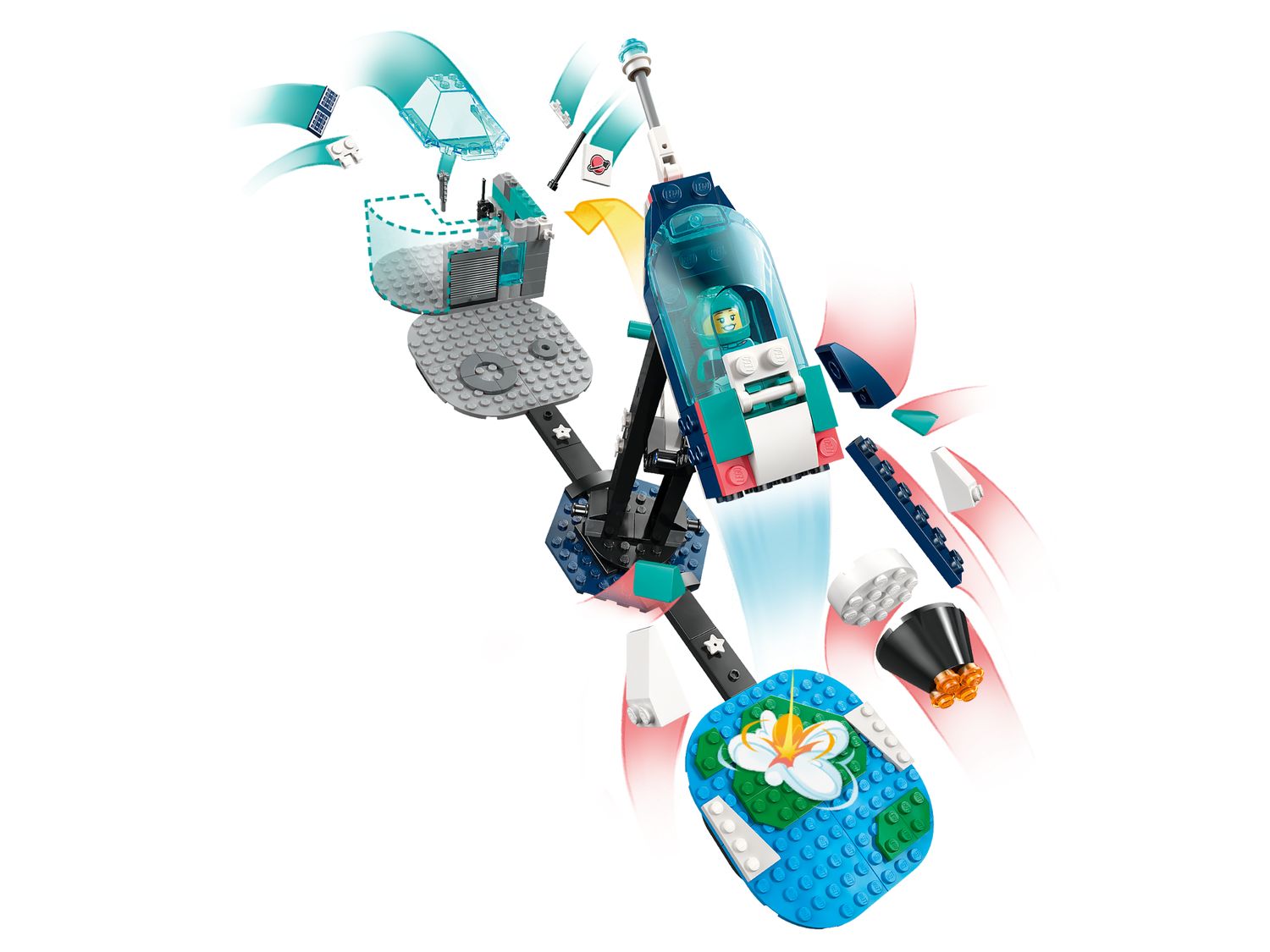
4. LEGO Education Moon Mission Science Kit
From the maker:
- Set 45200, ages 8+, 519 pieces.
- Includes two physical-science experiments.
Why it’s on the list: It pairs a substantial LEGO build with structured experiments, which suits a child who loves both space and building but hasn’t had much chance to test ideas.
Keep in mind: Two experiments is a focused scope; the value is the build plus those investigations rather than a long activity program. Check LEGO’s listing for how the experiment instructions are provided before buying. For coding, look at Piper or Artie 3000 instead.
5. Piper Computer Kit V4B with Sensor Explorer

From the maker:
- A Raspberry Pi-based kit that combines building, coding and electronics.
- Piper’s StoryMode educator guides are mapped to grades 3–8; the product page doesn’t give a simple box age.
Why it’s on the list: It’s the most ambitious pick here, for a child who wants a big project that ends with something they built and can program. The grade range in Piper’s lessons also leaves room to grow.
Keep in mind: Grades 3–8 describes Piper’s lesson materials, not an age marking on the box. Piper has sold more than one version, so make sure you’re getting V4B with Sensor Explorer, and check the listing for exactly what’s included and anything you need to supply. We’d plan on adult help for the build.
6. Artie 3000 coding robot

From the maker:
- Educational Insights item 1125, ages 7+.
- A drawing robot with coding tutorials in Blockly, Snap!, JavaScript and Python.
- No Internet connection or app required: the robot creates its own password-protected Wi-Fi link to a compatible tablet or computer.
Why it’s on the list: The drawing shows immediately whether the code worked, which makes debugging concrete. The language range runs from block coding to text languages, so it’s a smaller, simpler start than Piper with plenty of headroom.
Keep in mind: You still need a Wi-Fi-enabled tablet or computer to write the code, and an adult may want to handle the first connection. More options are in our coding toys guide.
See Educational Insights · Check on Amazon
How to choose
- Start with the interest. Puzzlers: Gravity Maze or Cat Crimes. Nature and science fans: the AmScope kit or Moon Mission. Future programmers: Artie 3000 or Piper.
- Think about help. Gravity Maze is made for solo play; the microscope and the Piper build work best as shared projects at first.
- Check the device. Artie 3000 needs a Wi-Fi-enabled tablet or computer, and Piper is itself a computer project.
- Treat ages as a guide. A maker’s age marking is a starting point, not a promise that every child will use a product independently.
More STEM gift guides
- Best STEM toys for 7-year-olds
- Best STEM toys for 6-year-olds
- Best coding toys for kids
- Best take-apart toys
Last update on 2026-10-14 / Affiliate links / Images from Amazon Product Advertising API